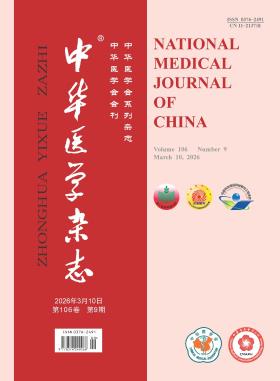
National Medical Journal of China
Volume 106 · Issue 09 · 2026
National Medical Journal of China
 No Data No Data
Osteoporotic fractures represent the most severe complication of osteoporosis, characterized by high incidence, high rates of missed diagnosis, high disability rates, and high mortality. These fractures impose substantial economic and caregiving burdens on both society and families. Strengthening screening in high-risk populations and implementing early interventions to prevent or reduce the occurrence of osteoporotic fractures are therefore of paramount significance. Therefore, the Professional Committee for Osteoporosis Prevention and Rehabilitation of Chinese Association of Rehabilitation Medicine, in collaboration with the Osteoarthrosis Committee of Chinese Aging Well Association, has initiated the development of the guideline for primary prevention of osteoporotic fractures. Key clinical issues of greatest concern to healthcare professionals were identified, including: identification of populations at high risk for osteoporotic fracture and fracture risk assessment; education and guidance for at-risk populations; fall prevention measures; assessment, diagnosis, and treatment of osteoporosis. This process culminated in the formulation of 11 evidence-based recommendations. The guideline aims to optimize primary prevention strategies for osteoporotic fractures, enhance healthcare professionals′ management of health in high-risk populations, strengthen self-protection awareness among these individuals, reduce fracture incidence, and ultimately improve the quality of life for those at risk.
To compare the therapeutic effects of hemithyroidectomy (HT) versus total thyroidectomy (TT) on sporadic medullary thyroid carcinoma (sMTC).
Clinical data of sMTC patients firstly treated in Tianjin Medical University Cancer Institute and Hospital from January 2011 to December 2019 were reviewed retrospectively. The patients were categorized into the HT group and the TT group based on the extents of primary tumor resection. The differences in clinical characteristics between the two groups were compared. A 1∶1 matching of variables including tumor stage and mulifocality was performed using propensity score matching (PSM) to balance the baseline differences between the two groups. Subsequently, the differences in biochemical cure rate, biochemical recurrence rate, and structural recurrence rate between the two groups were compared. Survival curves were plotted using the Kaplan-Meier method, and the log-rank test was utilized to compare the differences in progression-free survival and overall survival between the two groups.
A total of 199 patients with sMTC were included in the study, comprising 80 males and 119 females, with the age [M(Q1,Q3)] of 51.0 (42.0,59.0) years. Before PSM, 117 patients were in HT group and 82 patients were in TT group. There were statistically significant differences in preoperative calcitonin, N stage, TNM stage, and the number of lesions between the two groups (all P<0.05). After PSM, 63 patients were in HT group and 63 patients were in TT group. There was no statistically significant difference in all clinicopathological characteristics between the two groups (all P>0.05). Before PSM, the biochemical cure rate in the HT group was higher than that in the TT group [76.4% (81/106) vs 60.5% (46/76), P=0.021]. There were no statistically significant differences in the biochemical recurrence rate and structural recurrence rate between the HT group and the TT group [4.7% (5/106) vs 7.9% (6/76), 8.5% (10/117) vs 15.9% (13/82), both P>0.05]. The progression-free survival of the HT group was longer than that of the TT group [(137.26±3.53) vs (114.12±5.98) months, P=0.025]. There was no statistically significant difference in overall survival between the HT group and the TT group [(142.12±2.91) vs (126.92±5.15) months, P=0.140]. After PSM, there were no statistically significant differences between the HT group and the TT group in terms of biochemical cure rate [66.7% (40/60) vs 77.2% (44/57)], biochemical recurrence rate [5.0% (3/60) vs 7.0% (4/57)], structural recurrence rate [12.7% (8/63) vs 17.5% (11/63)], progression-free survival [(130.69±5.07) vs (112.19±6.91) months], and overall survival [(136.05±4.04) vs (124.71±6.83) months] (all P>0.05).
The therapeutic effects of HT and TT on sMTC are comparable. With careful preoperative evaluation, selective performance of HT is safe and feasible.
To analyze the risk factors for differentiated thyroid cancer(DTC) with distant metastases and establish a suitable prognostic risk prediction model.
A retrospective analysis was performed on the clinical data of 2 337 patients diagnosed with distant metastasis of DTC from January 2000 to December 2021, as recorded in the Surveillance, Epidemiology, and End Results (SEER) database. Using the sample function in R, patients were randomly divided into a training set (n=1 635) and an internal validation set (n=702) at a ratio of 7∶3. Additionally, 227 patients with DTC and distant metastasis from Tianjin Medical University Cancer Institute and Hospital between January 2010 and December 2021 were included as an external validation set. Univariate and multivariate Cox proportional hazards regression model analysis, least absolute shrinkage and selection operator (LASSO) regression analysis were employed to screen for prognostic factors affecting the outcomes of patients with DTC and distant metastasis, and a prognostic prediction model nomogram was constructed. The predictive ability, accuracy, and clinical applicability of the model were evaluated using the area under the receiver operating characteristic curve (AUC), calibration curves, and decision curve analysis (DCA).
A total of 2 337 patients with distant metastasis of DTC were retrieved from the SEER database, including 988 males and 1 349 females, with the age of (58.4±18.6) years. Among them, 1 254 patients died with a median overall survival (OS) time of [M (Q1, Q3)] 42.0 (13.0, 95.0) months. At Tianjin Medical University Cancer Institute and Hospital, a total of 227 patients with DTC accompanied by distant metastasis were included, comprising 62 males and 165 females, with the age of (56.7±16.8) years. Among these patients, 114 died with a median OS time of 43.0 (15.0, 101.0) months. The follow-up ended upon the patient′s death or March 31, 2025. After analysis using a univariate Cox proportional hazards regression model and screening via LASSO regression, 4 variables were included from the training set, including age, maximum tumor diameter, invasion of vital tissues, and surgical treatment. Multivariate Cox proportional hazards regression model analysis showed that age≥55 years (HR=3.37, 95%CI: 3.08-4.53), maximum tumor diameter>4 cm (HR=1.83, 95%CI: 1.12-2.99), and invasion of vital tissues (HR=2.15, 95%CI: 1.81-2.56) were risk factors affecting the OS of patients with DTC accompanied by distant metastasis, while surgical treatment (HR=0.44, 95%CI: 0.36-0.53) was a protective factor. A prognostic prediction model for patients with DTC accompanied by distant metastasis was constructed using these influencing factors. The AUC for predicting 3, 5, and 10 year OS were 0.780 (95%CI: 0.754-0.805), 0.769 (95%CI: 0.743-0.795), and 0.836 (95%CI: 0.809-0.864)(in the training set); 0.804 (95%CI: 0.768-0.841), 0.815 (95%CI: 0.779-0.850), and 0.877 (95%CI: 0.844-0.911)(in the internal validation set); and 0.753 (95%CI: 0.682-0.824), 0.717 (95%CI: 0.642-0.792), and 0.810 (95%CI: 0.725-0.894)(in the external validation set). The calibration curves demonstrated good fit between the predicted and observed values (all P>0.05), and DCA indicated that the model had high clinical application value.
Age≥55 years, maximum tumor diameter>4 cm, and vital tissue invasion are independent risk factors for poor survival in patients with metastatic DTC, whereas surgical treatment improves prognosis. The proposed nomogram provides reliable prognostic assessment and may support individualized risk stratification and clinical decision-making.
To explore the relationship between preoperative thyroglobulin (Tg) levels and recurrence risk as well as treatment response in patients with differentiated thyroid cancer (DTC).
A retrospective analysis was conducted on the clinical data of 604 patients with DTC who underwent total thyroidectomy at Shanghai Renji Hospital from January 1, 2020, to December 31, 2024. The postoperative recurrence status of patients was recorded, with follow-up ending on June 30, 2025. Determine the cut-off value of preoperative Tg for predicting patient prognosis using the maximum selected rank statistic method. Multivariate Cox proportional hazards regression model was used to analyze the risk factors for postoperative recurrence in DTC patients. Survival curves were plotted using the Kaplan-Meier method, and the log-rank test was used to evaluate the differences in postoperative disease-free survival rates and treatment response among DTC patients with different preoperative Tg levels.
Among the 604 patients, 417 were female and 187 were male, with the age of 45.0(36.0, 57.0) years. The preoperative Tg was 20.2 (10.4, 44.3) μg/L, and the follow-up period was 1.40 (0.85, 2.84) years. Multivariate Cox proportional hazards regression model analysis revealed that preoperative Tg levels≥36.2 μg/L (HR=14.180, 95%CI:1.745-115.200) was a risk factor for postoperative recurrence in DTC. Patients with the preoperative Tg level of<36.2 μg/L had a higher 3-year disease-free survival rate compared to those with the preoperative Tg level of≥36.2 μg/L (99.8% vs 92.3%, P<0.001). The proportion of patients with the favorable treatment response was lower among those with the preoperative Tg level of≥36.2 μg/L compared to those with the preoperative Tg level of<36.2 μg/L, whereas the proportions of patients with biochemical incomplete, structural incomplete, and indeterminate responses were higher among those with the preoperative Tg level of≥36.2 μg/L (all P<0.05).
Preoperative Tg levels are significantly associated with the recurrence risk and treatment response in DTC patients. The Tg level of≥36.2 μg/mL indicates a high recurrence risk and poor treatment response.
No Data No Data No DataA 66-year-old male was seen in the First Affiliated Hospital of Zhejiang University School of Medicine in September 2024 due to "memory loss for 2 years and speech difficulty for 1 year". The core manifestations were difficulty in finding words, poor speech fluency, and unclear speech expression. After cognitive assessment, magnetic resonance imaging and β-amyloid positron emission tomography (A β-PET), it was diagnosed as early-onset atypical Alzheimer's disease (AD) with Logopenic variant primary progressive aphasia (lvPPA) subtype. After 9 months of treatment with lencanezumab, the overall cognitive function of the patient was slightly improved, and the language expression was improved. A β-PET reexamination showed that the pathological deposition of amyloid protein was reduced, and no related adverse reactions were observed during the treatment. It suggests that it may have potential safety and efficacy for this type of atypical AD patients.
The 14-year-old child was seen in Peking Union Medical College Hospital on April 17, 2025 with "anemia for 10 years, intermittent fever for 4 years and repeated abdominal pain for more than 1 year". The children suffered from chronic anemia, intermittent abdominal pain with fever, obvious lagging in growth and development, height 3 standard deviations lower than the mean value of people of the same age and sex, and no menstrual cramps. Laboratory tests suggest increased inflammatory indicators,18F-fluorodeoxyglucose positron emission computed tomography (18F-FDG PET/CT) showed a mass with abnormally increased metabolism in the mesenteric root. After multidisciplinary consultation, "retroperitoneal mass resection" was performed, and the pathological diagnosis was single-center, mixed Castleman's disease (CD). The child recovered well after surgery, and the inflammatory index dropped to normal. Follow-up until July 16, 2025, the child had menarche and height increased by 2.2 cm compared with that before surgery.
Knee osteoarthritis (KOA) is a common disease with degenerative lesions of articular cartilage as its core, which seriously affects the quality of life of patients. Infrapatellar fat pad (IPFP) plays a key role in the pathological process of KOA. It is not only a mechanical buffer structure of the knee joint, but also an active endocrine and inflammatory regulatory organ. In KOA, IPFP secretes various inflammatory factors and adipokines, which participate in local inflammatory reaction of joints, metabolic disorders and cell senescence, and accelerate cartilage degeneration and pain. This paper systematically combs the pathogenesis of KOA and the anatomical characteristics of IPFP, focuses on explaining the dual mechanism of IPFP in KOA, and reviews new treatment strategies targeting IPFP, aiming at providing a new perspective for the mechanism research and prevention of KOA.
Cerebral amyloid angiopathy (CAA), characterized by the deposition of β-amyloid (A β) in the brain and the wall of small blood vessels, is an important cause of cerebral lobar hemorrhage and vascular cognitive impairment. Recent studies suggest that immune cells have phased and bidirectional regulation of CAA progression. Microglia can participate in peritubular A β clearance and reduce deposition to some extent, but sustained activation can induce inflammation, aggravate vascular damage and be associated with amyloid-related imaging abnormalities. Reactive astrocytic hyperplasia was observed in the early stage of CAA, and its phenotypic transformation and astrocyte-derived apolipoprotein E affected vascular deposition, vascular remodeling and bleeding risk. Edge-associated macrophages, especially perivascular macrophages, not only promote A β clearance, but also mediate cerebrovascular dysfunction through oxidative stress and aging-related mechanisms. In addition, the regulatory effects of peripheral immune cells on blood-brain barrier integrity and vascular inflammation have gradually received attention. Of course, partial immune intervention shows opposite effects in different pathological stages, and its boundary of action and safety still need to be further studied.
Overactive bladder (OAB) is a common chronic disease. In the adult population, the overall prevalence of OAB exceeds 10%, of which the elderly account for about 30%. However, commonly used nerve electrical stimulation therapies such as sacral nerve electrical stimulation are limited in the elderly because of its high surgical difficulty, the possibility of equipment displacement and high cost. This paper reviews the history and mechanism of tibial nerve stimulator, emphasizes the application status of new implantable tibial nerve stimulator in elderly OAB, foreign ReviTMAnd eCoin®Its safety and efficacy for elderly patients have been verified in recent clinical studies, and domestic implantable tibial nerve stimulators, such as Streamliner, have also begun to be developed in China. ™ The new implantable tibial nerve stimulation device provides a safe, minimally invasive and highly compliant effective treatment plan for elderly OAB patients with its adaptability advantages such as low power wireless control, simple implantation operation and higher economic accessibility, and has broad clinical application prospects, but its long-term efficacy still needs further verification. With the continuous advancement of technology iteration and evidence-based research, implantable tibial nerve stimulation devices are expected to become an important part of the treatment of elderly OAB, providing new solutions for improving patients' quality of life and alleviating the social medical burden.
CURRENT ISSUE